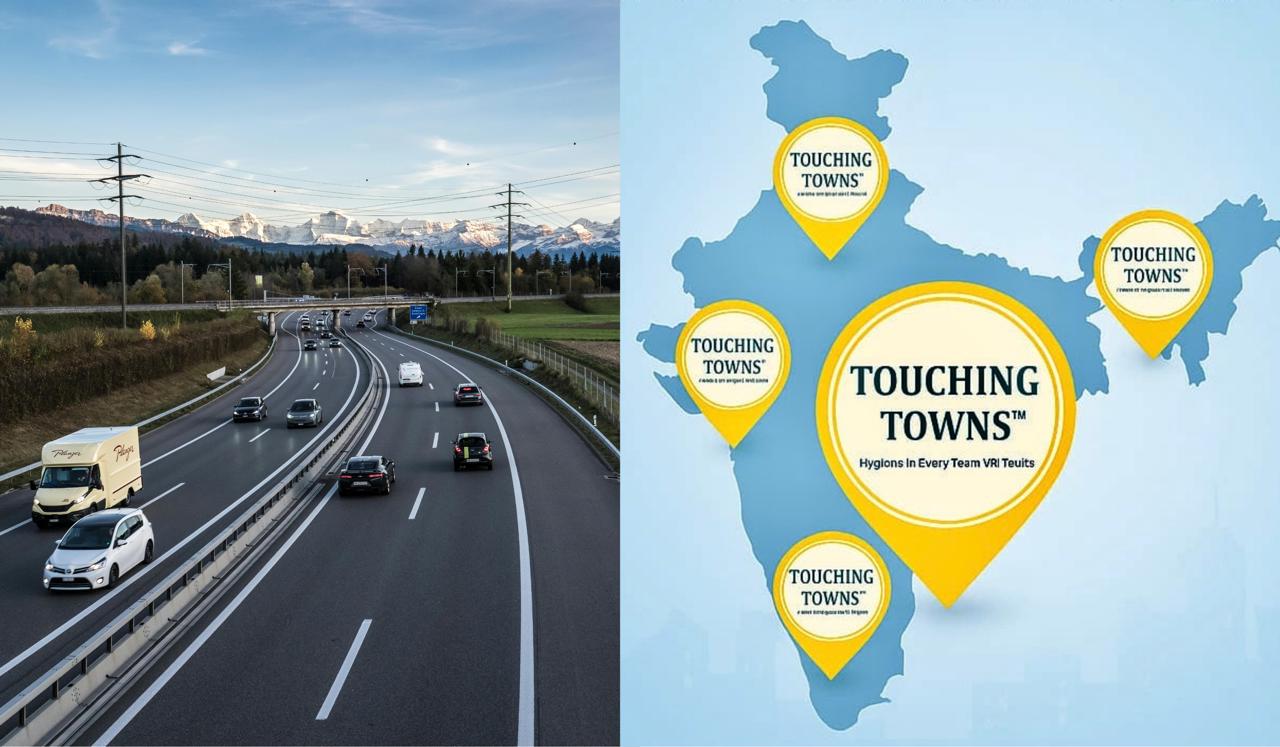
A CA-turned-entrepreneur is tackling India’s most overlooked gap, highway hygiene, with a model that educates rather than penalizes, aiming to transform the roadside hospitality sector
India’s highway infrastructure has undergone a remarkable transformation over the past decade. Billion-dollar expressways now connect metros to tier-2 cities, cutting through mountains and valleys with engineering precision that rivals global standards. The Delhi-Chandigarh highway, the Mumbai-Pune Expressway, and the newly expanded Golden Quadrilateral stand as testaments to India’s infrastructure ambitions.
Yet, ask any frequent highway traveler about their journey, and a common concern emerges: finding a clean, safe place to stop remains a challenge. Despite the world-class roads, the pit stops, restaurants, hotels, and rest areas, haven’t kept pace with the infrastructure boom.
Enter Touching Towns, a hygiene-focused startup that’s attempting to bridge this critical gap. Founded by Chartered Accountant Anshuman Chaudhary, the venture is working to establish cleanliness benchmarks across highway establishments, starting with the Delhi-Chandigarh corridor.
The Problem: India’s Highway Hospitality Gap
India has invested heavily in highways, recognising their importance for trade, tourism, and regional development. Expressways and national highways now form the backbone of long-distance travel, connecting industrial hubs, ports, tourist destinations, and urban centres.
However, the ecosystem that supports highway travel has not evolved at the same pace. For families on road trips, business travellers on tight schedules, or truck drivers covering thousands of kilometres, finding a clean, safe, and reliable place to stop is often a challenge.
Poorly maintained washrooms, inconsistent food safety practices, and limited accountability continue to define much of the roadside hospitality sector. While there are exceptions, hygiene standards vary significantly from one establishment to another, often depending on individual awareness rather than any structured system.
“The journey doesn’t end with good roads,” said Anshuman. “For travellers, the experience includes where they stop, eat, rest, and refresh. That part has been largely ignored.”
The issue has gained greater attention in recent years, particularly after the COVID-19 pandemic. Hygiene and cleanliness, once considered secondary concerns, have become non-negotiable expectations for many travellers. Families, women travellers, and elderly passengers increasingly plan their stops based on perceived safety and sanitation.
An Unconventional Entrepreneurial Shift
Anshuman’s decision to leave a stable professional career to work on highway hygiene may appear unconventional. Trained as a Chartered Accountant, his early career involved structured corporate work far removed from roadside eateries and rest areas.
But frequent highway travel exposed him to a recurring problem. Despite modern roads, basic amenities often fell short. Conversations with fellow travellers and roadside business owners revealed a deeper issue: a lack of awareness, training, and standardised practices rather than deliberate neglect.
According to Anshuman most owners are open to adopting better practices. However, many are not fully aware of what good hygiene standards look like or how they can be maintained in a sustainable way.
That insight shaped the foundation of Touching Towns, a venture designed to work with highway establishments rather than against them.
Education Over Enforcement
Unlike inspection-driven models that rely on penalties and compliance checks, Touching Towns adopts a collaborative approach. The startup focuses on educating owners and staff, building capacity, and creating systems that encourage continuous improvement.
Many highway restaurants, dhabas, and small hotels are family-run operations, often located in semi-urban or rural areas. Access to professional training, standard operating procedures, and structured feedback is limited.
Touching Towns begins by conducting on-site assessments to understand existing practices. These assessments cover kitchen hygiene, food handling, washroom maintenance, waste management, and overall cleanliness.
Based on the findings, the startup provides customised training programmes for staff, designed to be practical and easy to implement within existing constraints. The focus is on habits and processes rather than expensive upgrades.
“We are not here to penalise or shut anyone down,” Anshuman said. “The goal is to create awareness and pride in maintaining clean spaces.”
Regular monitoring and feedback mechanisms form a key part of the model. Establishments that consistently meet hygiene benchmarks are recognised, helping travellers identify reliable stopovers and encouraging businesses to maintain standards.
A Large, Fragmented Ecosystem
India’s highway hospitality sector is vast and highly fragmented. Thousands of roadside eateries, rest areas, and small hotels serve millions of travellers daily. Despite the scale, organised efforts to standardise hygiene and service quality remain limited.
While food safety and sanitation regulations exist, their implementation varies widely. In many cases, enforcement focuses on urban centres, leaving highway establishments outside the scope of regular oversight.
Industry experts note that this creates a structural gap. Individual businesses often lack the incentive, knowledge, or resources to upgrade standards independently. A neutral, third-party framework that aligns business benefits with hygiene outcomes could help address this imbalance.
Commercial drivers represent a particularly important stakeholder group. Transporting a significant share of the country’s freight, truck drivers spend long periods on highways and depend heavily on roadside facilities. Clean washrooms, safe food, and basic rest amenities directly impact their health and productivity.
At the same time, rising vehicle ownership and the growing popularity of road travel among middle-class families are increasing demand for better highway experiences.
Starting with a Key Corridor
Touching Towns has begun its work along the Delhi–Chandigarh highway, one of North India’s busiest and most diverse travel corridors. The stretch serves commuters, tourists, business travellers, and long-haul drivers, offering a broad cross-section of user needs.
The startup is currently focused on onboarding partner establishments, conducting baseline assessments, and implementing training programmes. The aim is to create a visible network of hygienic and reliable stopovers that travellers can identify with confidence.
Feedback from travellers is integrated into the system, helping establishments address issues quickly and reinforcing accountability.
“Trust is built over time,” Anshuman said. “Once travellers know where they can stop without hesitation, behaviour begins to change.”
Scaling Without Building Infrastructure
A key strength of the Touching Towns model is its scalability. Rather than constructing new facilities, the startup works to improve existing ones. This reduces capital intensity while allowing faster expansion across multiple regions.
The long-term vision involves extending operations to other major highway corridors, including key national and state highways. By standardising training modules and monitoring systems, the company aims to maintain consistency while adapting to local conditions.
Partnerships across the travel ecosystem are also being explored, including potential collaborations with mobility platforms, travel services, and logistics players seeking to enhance user experience.
Aligning Hygiene with Business Outcomes
While Touching Towns positions itself as a mission-driven initiative, the business case is clear. Cleanliness and hygiene directly influence customer choice, repeat visits, and reputation.
Establishments that maintain higher standards benefit from increased visibility and trust. For highway businesses operating in competitive clusters, even small improvements in perception can translate into higher footfall.
Hygiene is not just a health issue,” Anshuman said. “It has a direct impact on the overall quality of a business.
The startup is exploring multiple revenue avenues, including training services, partnership models, and customer engagement platforms, ensuring that commercial sustainability aligns with service improvement.
Challenges on the Road Ahead
Scaling a hygiene-focused initiative across India’s vast geography is not without challenges. Changing long-standing practices requires sustained engagement. Smaller establishments often operate on thin margins, making even modest investments difficult without clear short-term returns.
Maintaining consistent standards across regions with varying infrastructure, water availability, and waste management systems adds complexity. The need for trained personnel and robust monitoring systems will grow as the network expands.
Competition could also emerge as awareness around highway hygiene increases. Larger hospitality chains or technology platforms may enter the space with greater resources.
Nevertheless, observers believe that rising consumer expectations and post-pandemic awareness create a favourable environment for such models.
Redefining the Highway Experience
Touching Towns reflects a broader shift in how infrastructure development is being understood in India. As physical connectivity improves, attention is gradually turning toward the quality of services that support daily travel.
For Anshuman, the move from spreadsheets to roadside establishments represents a logical extension of problem-solving. “Infrastructure is not just about what we build,” he said. “It’s about how people experience it.”
As India continues to invest in roads and mobility, initiatives that focus on dignity, hygiene, and safety could play a critical role in shaping the next phase of highway travel.
World-class roads, many argue, deserve equally dependable rest stops. Whether Touching Towns can scale its model nationally remains to be seen, but the problem it seeks to solve is one that millions of Indian travellers recognise all too well.