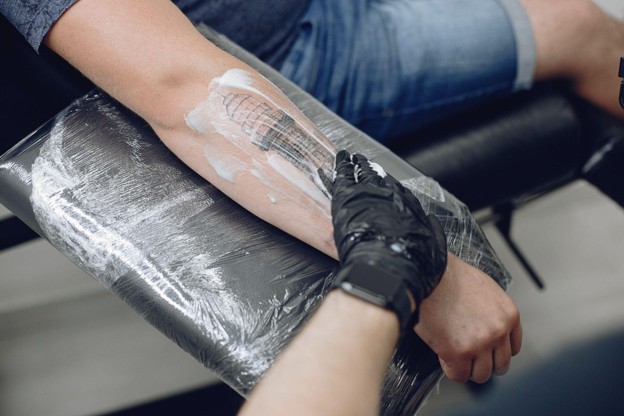
During a detailed tattoo session, tattoo soap can help artists remove excess ink and other material from the skin so the developing design remains easier to see. Maintaining a clear working surface allows artists to evaluate linework, shading, saturation, and small details as the tattoo progresses instead of relying on a view obscured by surface residue.
Cleansing is therefore more than a preparation step. It becomes part of the working rhythm of a session, helping artists move between tattooing, inspecting the area, and deciding what needs attention next.
Visibility Matters as the Design Develops
Tattoo artists make visual decisions throughout a session. After completing a section, they may need to determine whether lines are consistent, shading has reached the intended depth, or color appears sufficiently saturated. Excess ink and other residue on the surface can make those judgments more difficult.
Using tattoo soap at appropriate points can help clear the area and reveal the work underneath. This is especially useful in designs involving:
- Fine lines positioned close together
- Dense black or heavily saturated areas
- Gradual shading and smooth transitions
- Multiple colors or contrasting pigments
- Small highlights and finishing details
- Intricate illustrative elements
A clearer view does not change an artist’s technique, but it can provide better visual information for deciding how the next stage should proceed.
Cleansing Continues After Skin Preparation
Preparing the skin before tattooing is important, but cleansing needs do not end once the first line is placed. Ink and other material can collect on the working area throughout the procedure.
Periodic cleansing with tattoo soap can remove that buildup before the artist evaluates the next section. S8’s RED Soap is designed as a foaming cleanser for use during tattoo procedures and is intended to remove dried blood, protein soils, and debris from the working area.
Tattoo Soap Can Support More Accurate Linework Evaluation
Detailed linework often leaves little room for visual confusion. Closely spaced lines, small shapes, and intricate patterns require the artist to know exactly what has already been completed.
Surface ink can temporarily hide portions of the design or make separate lines appear less distinct. Clearing the area with tattoo soap can help the artist see where completed linework ends and where additional work should begin.
Shading and Color Need Repeated Assessment
Shading is usually built progressively. Artists may work through several areas and evaluate the relationship between darker tones, mid-tones, and lighter transitions before adding more.
Color work requires similar assessment. The artist needs to consider saturation, contrast, neighboring pigments, and whether highlights are creating the intended effect.
A tattoo soap can help clear excess material before these decisions are made. Once the surface is easier to read, the artist can better judge whether a section needs additional saturation or whether it is ready to be left alone.
An Organized Workstation Reduces Avoidable Interruptions
A smooth tattoo session often begins with preparation. Artists can arrange ink caps, cartridges, rinse supplies, disposable materials, and cleansing products before tattooing starts.
Keeping tattoo soap ready and accessible means cleansing can fit naturally into the session instead of becoming an interruption. S8 offers RED Soap as a foaming product designed for tattoo procedures, eliminating the need to prepare a traditional diluted green-soap mixture before use.
Efficiency in this setting does not mean rushing. It means removing unnecessary friction from repetitive tasks.
Cleaning the Surface Is Only One Part of Tattoo Hygiene
Maintaining visibility should always exist within a broader infection-control process. Tattooing can involve exposure to blood and other potentially infectious materials, so cleansing the skin does not replace established safety practices.
The CDC’s National Institute for Occupational Safety and Health guides tattooists and body piercers on reducing occupational exposure to bloodborne pathogens.
Professional procedures can include appropriate hand hygiene, glove use, safe sharps handling, barriers, equipment practices, surface controls, and proper disposal methods. Artists should also follow applicable state and local requirements.
Tattoo soap has a specific role in cleansing the working area. It should be used according to manufacturer directions as one component of an appropriately managed professional environment rather than treated as a substitute for broader infection-control measures.
The Condition of the Skin Still Matters
Tattooed skin is being repeatedly worked, which makes purposeful cleansing important. The goal is to remove material when necessary for visibility and workflow while continuing to observe how the skin responds.
S8 describes RED Soap as containing ingredients including sea buckthorn and aloe vera and positions the formula for use during tattoo procedures. An appropriate tattoo soap can therefore fit into a process where cleansing and observation occur together.
Clearer Surfaces Can Reduce Unnecessary Reworking
Surface pigment can sometimes make a tattooed section appear different from the result underneath. A shaded area may look darker because loose pigment remains on the skin, while a small line may be difficult to evaluate until surrounding residue is removed.
Using tattoo soap before making another pass can provide a clearer basis for that decision.
Visibility Matters Through the Final Details
The last stages of a tattoo often require careful inspection. Artists may review line consistency, transitions, saturation, highlights, and small areas that could need refinement.
Clearing the working surface with tattoo soap helps reveal the developing result before you make those final decisions. Occasionally an area needs additional attention; in other cases, cleansing shows that the desired effect is already present.
A clear surface helps keep those choices tied to visible results.
Professional tattooing combines creativity with continuous technical assessment. Maintaining a workable surface supports that process by allowing artists to repeatedly see, evaluate, and respond to the design as it develops.
S8’s RED Soap is designed around this practical need. Used as part of an organized workflow, tattoo soap can help artists move more naturally between working, cleansing, inspecting, and continuing the design. It cannot replace artistic skill, sound technique, or infection-control procedures, but it can make one recurring part of the session easier to manage.
When lines, shades, colors, and finishing details all require careful evaluation, maintaining visibility helps keep the artist’s attention where it belongs: on executing the tattoo with precision.