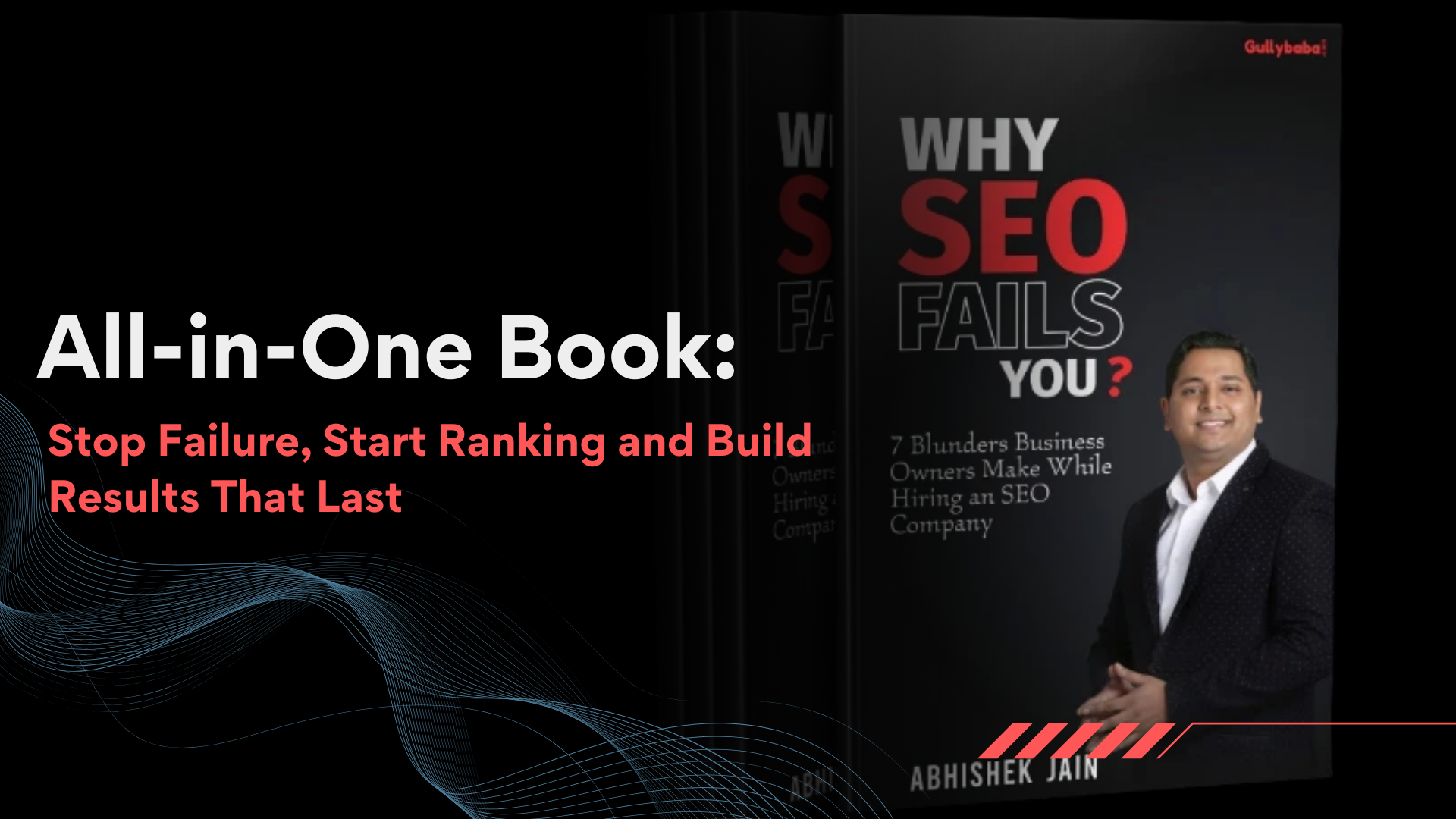
SEO strategies often fall apart quicker than you can put them into action. You listen to expert suggestions, invest in content, and optimise your pages, but the rankings still don’t move. The issue is not with your hard work – it’s about how you approach it. “Why SEO Fails You” by Abhishek Jain disrupts this pattern by revealing what the so-called specialists won’t admit: much of their SEO advice leads companies directly to unseen dead ends.
The Gap Between Promise and Reality
Optimisation for search engines has turned into an industry full of unfulfilled promises. Agencies promote packages, consultants provide audits, and courses promise outcomes. However, websites still linger on the fifth page, traffic remains unchanged, and conversion rates are unsatisfactory. This gap exists because traditional SEO knowledge focuses on addressing symptoms, not the root problems. The book reveals these basic mistakes with exact sharpness.
Why Traditional SEO Approaches Collapse
Many SEO plans fail because they rely on outdated methods that Google’s algorithms have already surpassed. Filling pages with keywords was replaced by content marketing, which evolved into the mass production of average-quality articles. Building links became a process of asking for links and eventually buying them, resulting in cycles of punishment and fear. Such methods may have been effective in the past, but as search engines evolved and changed, the guidance remained unchanged over time.
The typical SEO process treats ranking elements as separate items to be checked off. Improve meta tags, tick. Include internal links, tick. Post blog articles, check. This systematic method overlooks the overall environment that truly defines search visibility. Search engines assess user experience, content suitability, site authority, and many other factors simultaneously. Treating them separately guarantees suboptimal results.
The Secret Knowledge Gap
Certain insights are guarded carefully by professional SEO experts. These aren’t magical tricks, but rather basic understandings of how search algorithms process and rank content. The book unveils these inner viewpoints, revealing the strategies that lead to lasting organic growth instead of just short-term ranking increases.
To understand search intent is much more than just connecting keywords with queries. It involves studying how users behave, the competitive environment, and identifying missing content that could represent real opportunities. Many businesses pursue high-volume keywords without thinking about whether they can genuinely compete or if that traffic will turn into conversions. Strategic SEO means identifying winnable battles that align with business objectives.
Building Authority That Endures
To achieve lasting high rankings, you need to build real authority in your area of expertise. This goes beyond just sharing content; it involves making resources that are so useful and valuable that other websites choose to refer to them naturally. The book outlines structures for systematically building this kind of authority, rather than relying on the chance of going viral.
The foundation is formed by technical excellence. Websites that take a long time to load, mislead crawlers, or annoy users will not achieve persistent visibility, regardless of the quality of their content. However, without strategic planning for content and authoritative positioning, just focusing on perfecting a website technically might result in having a site that nobody finds interesting.
The Framework for Lasting Results
“Why SEO Fails You” by Abhishek Jain provides an in-depth approach that considers all vital aspects simultaneously. It brings together technical optimisation and content planning, links gathering methods with brand placement and understanding of analytics with making strategic choices. This combined way avoids separate efforts, which cause failure for most SEO plans.
The structure highlights evaluation and adjustment. Search methods are always evolving, but the principles of creating value and keeping users happy remain the same. If businesses form their SEO plans based on these unchanging principles yet watch performance measures carefully, they can remain visible during algorithm changes that harm rivals.
From Theory to Implementation
Knowledge without use makes no change. The book transforms ideas into practical steps that any business can implement, regardless of its size or industry. Whether you are a solo entrepreneur or running a big company, the strategies adjust to your means and goals.
Clear diagnostic methods assist in recognising the areas that require immediate focus compared to those needing long-term growth. Priority structures stop us from feeling overwhelmed by trying to enhance everything at once. Step-by-step guides make execution free of uncertainty.
Reclaiming Your Organic Growth
Failure in SEO is not a certain thing – it usually happens when you follow advice that aims to sell services instead of producing real results. To escape this, one must comprehend why traditional methods don’t work and start using strategies based on how search engines truly act, not on the myths created by marketers.
“Why SEO Fails You” provides that comprehension, along with useful tools for application. It changes SEO from an annoying cost to a foreseeable growth resource. Rankings improve, traffic increases, and conversions follow because the foundation promotes lasting success rather than fleeting victories.
Do not continue using strategies that have already failed. Begin creating visibility which increases over time. Discover the comprehensive framework in one comprehensive resource, finally providing honest information about what is effective.