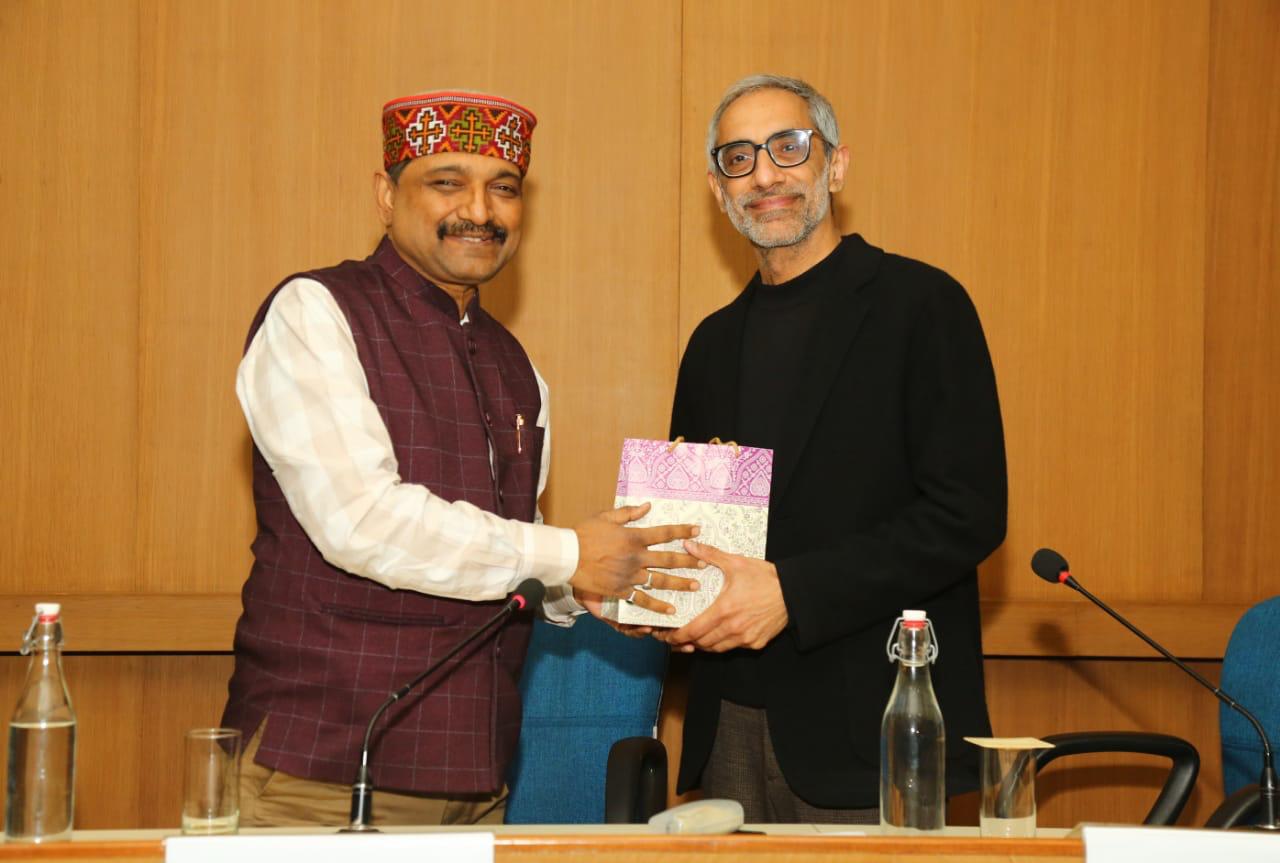
New Delhi, Dec 29: India Habitat Centre (IHC) organised a public awareness talk titled “Understanding Stroke: Recognition, Treatment and Prevention” recently to create awareness on the silent killer Brain Stroke. The session was delivered by Dr Rohit Bhatia, neurologist at All India Institute of Medical Sciences, and was organised in collaboration with the Subhadra Nambudiri Foundation.
The talk was chaired by Prof. (Dr.) K. G. Suresh, Director, India Habitat Centre, who spoke about the critical need for greater public awareness around stroke. Sharing a personal reflection, Prof. Suresh recalled losing his mother to a stroke at a time when awareness and understanding of the condition were limited. He emphasised that timely recognition and immediate medical response can significantly reduce fatalities and long-term disability, and that awareness initiatives such as this play an important role in saving lives.
In his address, Dr Bhatia highlighted that stroke is one of the leading causes of death and long-term disability in India, affecting individuals across age groups. He explained that strokes occur either due to blockage of blood vessels supplying the brain or due to bleeding within the brain, and stressed that stroke should always be treated as a medical emergency. Emphasising the concept of “Time is Brain,” he noted that delays in reaching a hospital can lead to irreversible brain damage.
Dr Bhatia outlined the importance of recognising early warning signs using the internationally accepted BE FAST approach, which focuses on sudden loss of balance, vision problems, facial drooping, weakness in arms or legs, speech difficulties and the need to act without delay. He also discussed common risk factors such as high blood pressure, diabetes, smoking, alcohol consumption, high cholesterol, heart disease, obesity and physical inactivity, while noting that age, gender, genetics and family history also play a role.
The session also addressed advances in stroke care, including clot-dissolving therapies, endovascular procedures and specialised stroke unit management, all of which can dramatically improve outcomes when patients receive timely treatment. Dr Bhatia underscored that preventive care, lifestyle modification and effective management of chronic conditions are essential to reducing the growing burden of stroke in the country.
The talk concluded with an interactive discussion with the audience, reinforcing the importance of sustained public education, early recognition and rapid access to medical care in tackling stroke-related morbidity and mortality.