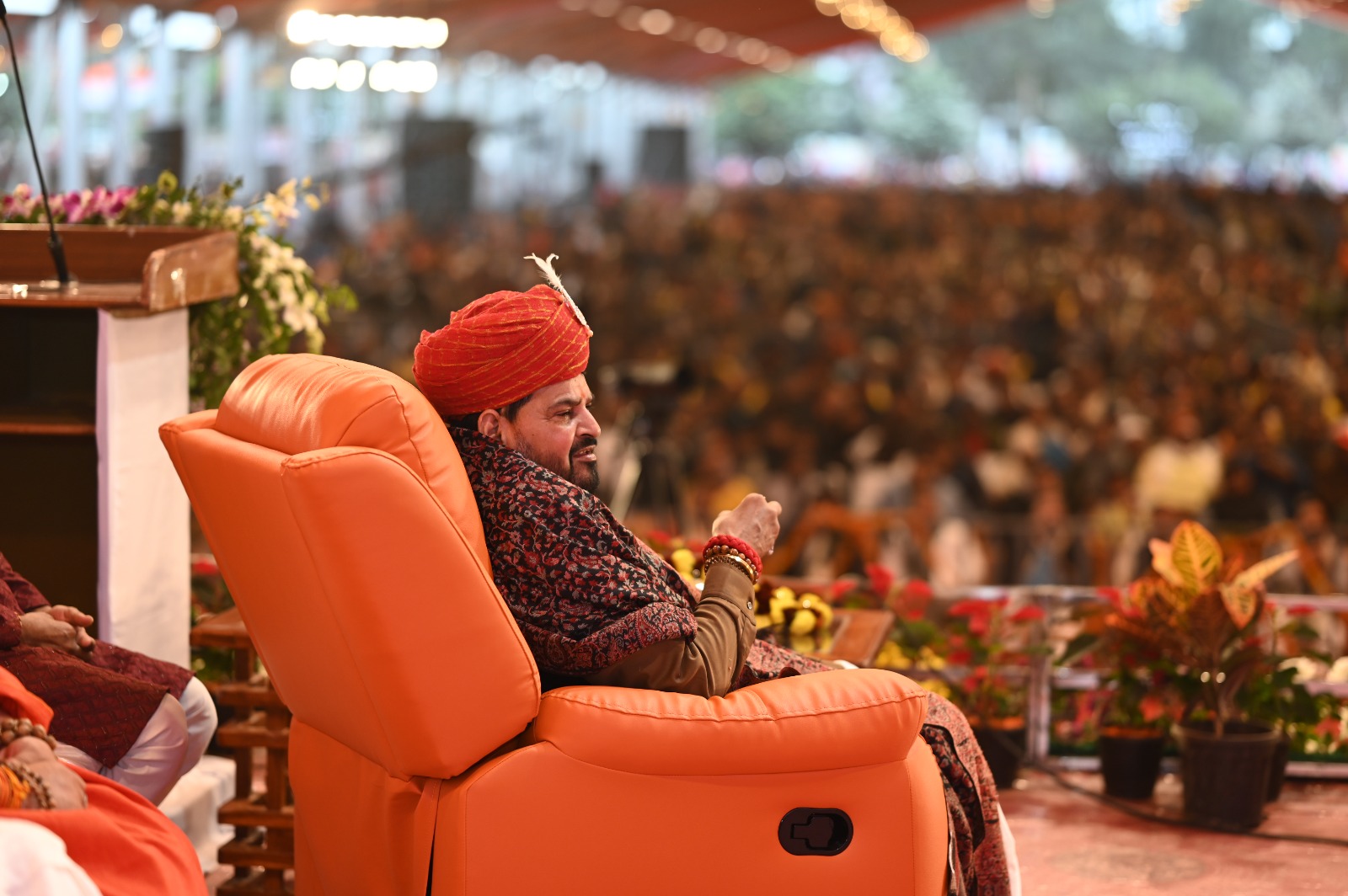
The Divine Historic Rashtra Katha being held at Prakshetra Nandini Niketan, Ayodhya, is not only a spiritual discourse but a deeply meaningful journey – especially for Brij Bhushan Sharan Singh Ji. While the eight-day Rashtra Katha, scheduled from 1 January to 8 January, brings together devotion, tradition, and national consciousness, it also reflects a personal commitment rooted in belief, emotion, and purpose.
The significance begins with the way the Rashtra Katha is structured. 1 January marks the formal inauguration, laying the spiritual and ideological foundation of the Mahotsav. This opening day reflects discipline, reverence, and collective intent. For Brij Bhushan Sharan Singh Ji, this beginning carries emotional weight, as it represents an offering of thought and faith rather than a ceremonial event.
The narrative formally unfolds on 2 January, which stands as Day One of the Rashtra Katha. On this day, spiritual discourses take shape through reflections drawn from Ram Katha, Krishna Katha, and Hanumant Katha, not as distant scriptures, but as guiding philosophies for present-day life. The audience remains deeply engaged, listening with curiosity and openness. This day reflects Brij Bhushan Ji’s long-held belief that cultural understanding forms the backbone of a strong nation.
The journey deepens further on 3 January, marking Day Two of the Rashtra Katha. By this stage, a visible connection forms between the speaker and the listeners. The continuity of discourse encourages reflection on values, discipline, and social responsibility. Devotees appear enriched – filled with joy that comes from learning, not entertainment. This transformation among the audience reflects exactly why the Rashtra Katha holds such a close place in Brij Bhushan Ji’s heart.
Throughout the Mahotsav, Param Pujya Sadhguru Shri Riteshwar Maharaj serves as the spiritual anchor of the Rashtra Katha. His narration blends ancient wisdom with clarity and relevance, especially resonating with students and young minds. His presence adds depth and sincerity to the discourse, aligning seamlessly with the broader vision of the event.
Another deeply personal aspect lies in the dates themselves. The Rashtra Katha concludes on 8 January, which also marks Brij Bhushan Sharan Singh Ji’s birthday. Rather than celebrating the occasion in a personal manner, this alignment reflects a conscious choice – to associate a personal milestone with collective spiritual upliftment. Similarly, 5 January, which falls during the Katha, marks the birthday of Param Pujya Sadhguru Shri Riteshwar Maharaj, further strengthening the emotional and spiritual continuity of the Mahotsav.
Brij Bhushan Sharan Singh Ji often emphasizes that the upliftment of students is the true upliftment of the nation. This belief forms the emotional and ideological core of the Rashtra Katha. By creating a platform that speaks directly to youth – through stories, values, and self-discipline – the Rashtra Katha becomes a living reflection of this philosophy.
The atmosphere at Prakshetra Nandini Niketan mirrors this intent. Devotees from diverse backgrounds gather not merely to listen, but to participate in a shared journey of awareness. The mood remains calm, attentive, and deeply respectful, making the experience collective rather than individual.
Ultimately, the Rashtra Katha is close to Brij Bhushan Sharan Singh Ji’s heart because it transforms faith into purpose and belief into responsibility. It represents a space where personal devotion aligns with national consciousness—where milestones are not celebrated in isolation, but offered back to society.