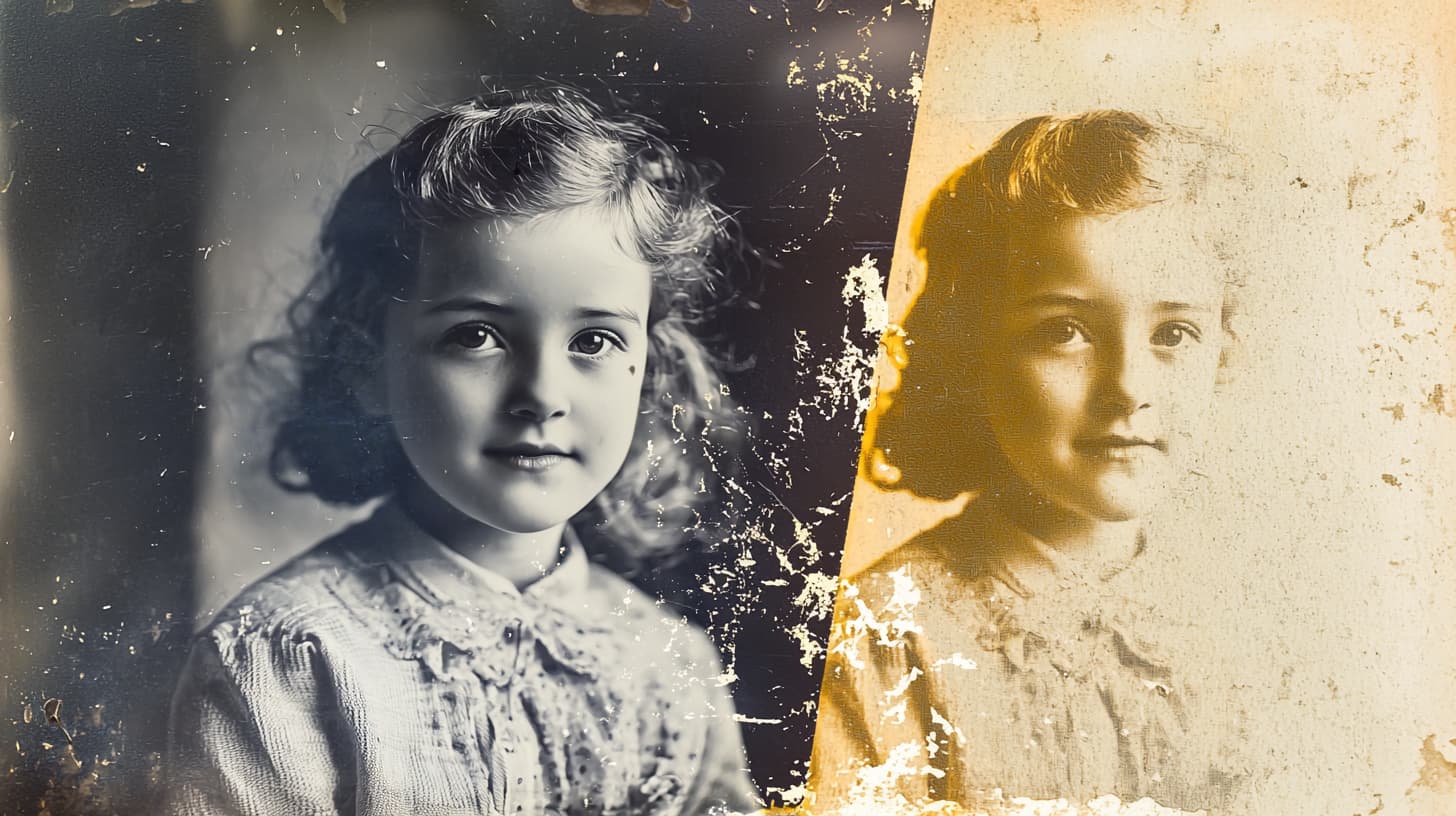
Photographs are more than images; they are fragments of personal history, cultural identity, and emotional connection. Every old print tucked inside a family album or stored in a wooden box carries a unique story. Some photos capture joyful celebrations, others show quiet everyday moments, and many document the faces of loved ones who are no longer here. But time, unfortunately, is unkind to physical photographs. The paper yellows, ink fades, corners tear, and environmental exposure erodes the clarity that once defined these memories. What was once a vibrant portrait becomes a blurred or damaged snapshot of the past.
Today, artificial intelligence has introduced a remarkable solution to the fragility of printed memories. AI-powered old photo restoration online free and AI image extender have become powerful tools that allow people to restore, rebuild, and even enhance historical photos. These technologies not only revive details long lost to time but also expand images in ways that preserve integrity while adapting them for modern uses. Through restoration and extension, AI is reshaping the way families, archivists, and businesses preserve visual heritage.
Understanding the Purpose of Old Photo Restoration
The Natural Decline of Physical Photographs
Even when stored in ideal conditions, physical photographs deteriorate gradually. Heat and humidity accelerate chemical reactions in the paper and ink. Dust, oils from handling, and friction cause scratches and smudges. Folds or creases distort backgrounds and faces. Excessive sunlight fades images until once-distinct edges blur into indistinguishable shapes. Some photos even lose entire sections because of mold, water damage, or simple wear and tear.
Old photo restoration exists to counter these effects. It aims to bring damaged or faded images back to life by repairing imperfections, rebalancing color and contrast, and reconstructing missing details. Traditionally, this required trained artists manually retouching each image. While highly effective, it was slow and costly, limiting access for many families and organizations.
How AI Restores Photos with Unprecedented Accuracy
Artificial intelligence has transformed photo restoration by automating complex repair work. When an old image is uploaded into an AI restoration tool, the system analyzes its structure pixel by pixel. It identifies damage such as cracks, stains, wrinkles, graininess, and missing fragments. It also evaluates lighting imbalances, color fading, blur, and distortion. Using this information, the AI reconstructs a clearer version of the photo.
Because AI models are trained on vast datasets containing millions of faces, environments, and textures, they understand what a clean, undamaged image should look like. If a face is unclear, the AI can sharpen facial features, restore symmetry, rebuild missing lines, and adjust tones without altering the identity of the person. If a background is damaged, the AI intelligently recreates the scenery in a way that feels authentic to the original time period.
Restoration becomes both scientific and artistic, driven by data yet grounded in emotional significance.
How People Use Restoration Technology
AI restoration tools are designed to be simple enough for everyday users. Someone scans an old photo or takes a clear picture of it using their phone. Once uploaded, the AI handles everything automatically, repairing decades of damage in seconds. The transformed image is then ready to download, print, store digitally, or share with family.
This instant accessibility encourages people to preserve entire collections rather than just a few photos. Boxes of aging prints can be revived, digitized, and shared across generations. Families that once believed their history was lost to time can now rediscover faces and moments they had forgotten.
Why Individuals Depend on Photo Restoration
Old photo restoration holds tremendous emotional value for individuals. Many people inherit collections of photos that are fragile, incomplete, or nearly unrecognizable. Restoring these images helps reconnect families with their past. It allows children and grandchildren to see ancestors clearly and understand their lineage more deeply. Restored images can be displayed proudly during family gatherings, memorials, celebrations, or storytelling sessions.
People also use restoration for digital archiving. Modern life demands that memories be preserved in formats compatible with future technologies. By restoring old prints and converting them into high-quality digital files, individuals protect their stories from being lost.
Restoration often becomes a bridge between generations, helping preserve identity, heritage, and emotion.
Why Organizations and Archives Benefit from AI Restoration
Institutions such as museums, libraries, historical societies, and news agencies often house vast collections of aging photographs. These images document cultural events, societal transformations, and personal histories. Restoring them helps preserve important narratives that would otherwise fade.
AI allows these institutions to restore enormous archives quickly without overwhelming manual labor. Once digitized and restored, the images become valuable resources for exhibitions, research, publications, and educational projects. Businesses also use restored images in marketing materials, anniversaries, documentaries, and heritage storytelling.
Restoration strengthens both historical knowledge and corporate identity.
Exploring the Role of Image Extenders in Photo Revival
Why Many Photos Need Extension
Restoration repairs what is already present, but many old photos suffer from incomplete edges or missing areas. Corners may be torn away. Frames may crop images too tightly. Scanners may cut off important sections. Some users may want to adapt a photo to fit a new format—such as a widescreen display, a photobook layout, or a digital frame—without losing the original composition.
An AI image extender solves these issues by expanding the image beyond its original boundaries. Instead of stretching or distorting the existing content, the AI generates new background, texture, color, and detail that seamlessly matches the original.
Image extension transforms damaged or constrained photos into complete, visually balanced pieces.
How AI Extends Images Naturally
Image extension begins with the AI analyzing the existing visual elements—the direction of light, the variation in color, the pattern of textures, the lines and shapes within the image. It identifies the logical continuation of elements such as curtains, floors, skies, landscapes, clothing, or walls. Once the AI understands the structure, it generates entirely new content that fits perfectly into the surrounding areas.
If an old portrait is missing the bottom edge, the AI reconstructs the clothing and background. If a landscape photo is cut off at the sides, the AI expands the scenery to build a wider view. If a group photo has a torn section, the AI restores the missing portion without altering the appearance of the people.
This intelligent continuation allows even severely damaged photos to regain balance and symmetry.
How Users Apply Image Extension
Users interact with image extenders much like restoration tools. After uploading a photo, they choose which sides of the image they want to extend. The AI processes the request and produces a new image with a broader canvas or reconstructed edges. The user can accept the result or regenerate it for variation.
This ease of use empowers individuals and designers to adapt any photo for creative or functional purposes. Whether preparing prints, designing layouts, or repairing damage, image extension offers flexibility that aligns with modern digital needs.
Why Individuals Use Image Extenders
Individuals rely on image extension for both sentimental and creative reasons. Old photos that are incomplete can finally be restored to full shape. Family portraits that feel cramped can gain breathing room. Scenic landscapes can be expanded to capture the grandeur intended by the original photographer.
People creating memory books or digital slideshows find image extension especially useful. Modern printing and display formats often require specific dimensions, and extending an image ensures the entire photo remains intact without cropping out meaningful elements.
The tool offers artistic freedom and emotional fulfillment.
Why Businesses and Archives Use Image Extenders
Organizations also find tremendous value in image extenders. Archives and museums use them to reconstruct damaged historical materials for display purposes. Publishers extend images to fit magazine layouts or book covers. Marketing teams extend backgrounds to add text, branding, or design elements without covering important subjects.
Photographers use extension tools when clients request larger prints than the original framing allows. Real estate companies extend property images to make room for descriptive information. In each case, the extender provides practical, professional results that elevate visual presentation.
The Combined Power of Restoration and Extension
Old photo restoration and image extension are especially powerful when used together. Restoration enhances clarity, repairs damage, and revives the emotional essence of the image. Extension completes the composition, expands the visual narrative, and prepares the photograph for modern uses.
A photo that once seemed beyond repair can be transformed entirely. A torn family portrait can be restored, extended, printed, and proudly displayed. Historical documents can be revived and adapted for exhibitions. Personal memories can be preserved with integrity and shared widely across generations.
Together, these two technologies transform not just images but the stories behind them.
Conclusion
Artificial intelligence has reshaped how we preserve the past. Old photo restoration and image extension offer powerful, accessible solutions for reviving damaged, faded, or incomplete photographs. They allow individuals to reconnect with their roots, families to preserve cherished memories, and organizations to protect cultural heritage.
These tools make restoration faster, more accurate, and more affordable than ever before. As AI continues to evolve, the possibilities for reconstructing and enhancing historical images will only expand. With restoration and extension working hand in hand, memories once thought lost can be revived, renewed, and celebrated for generations to come.